

1. The Strait of Hormuz Crisis and Iraq's Structural Export Vulnerability
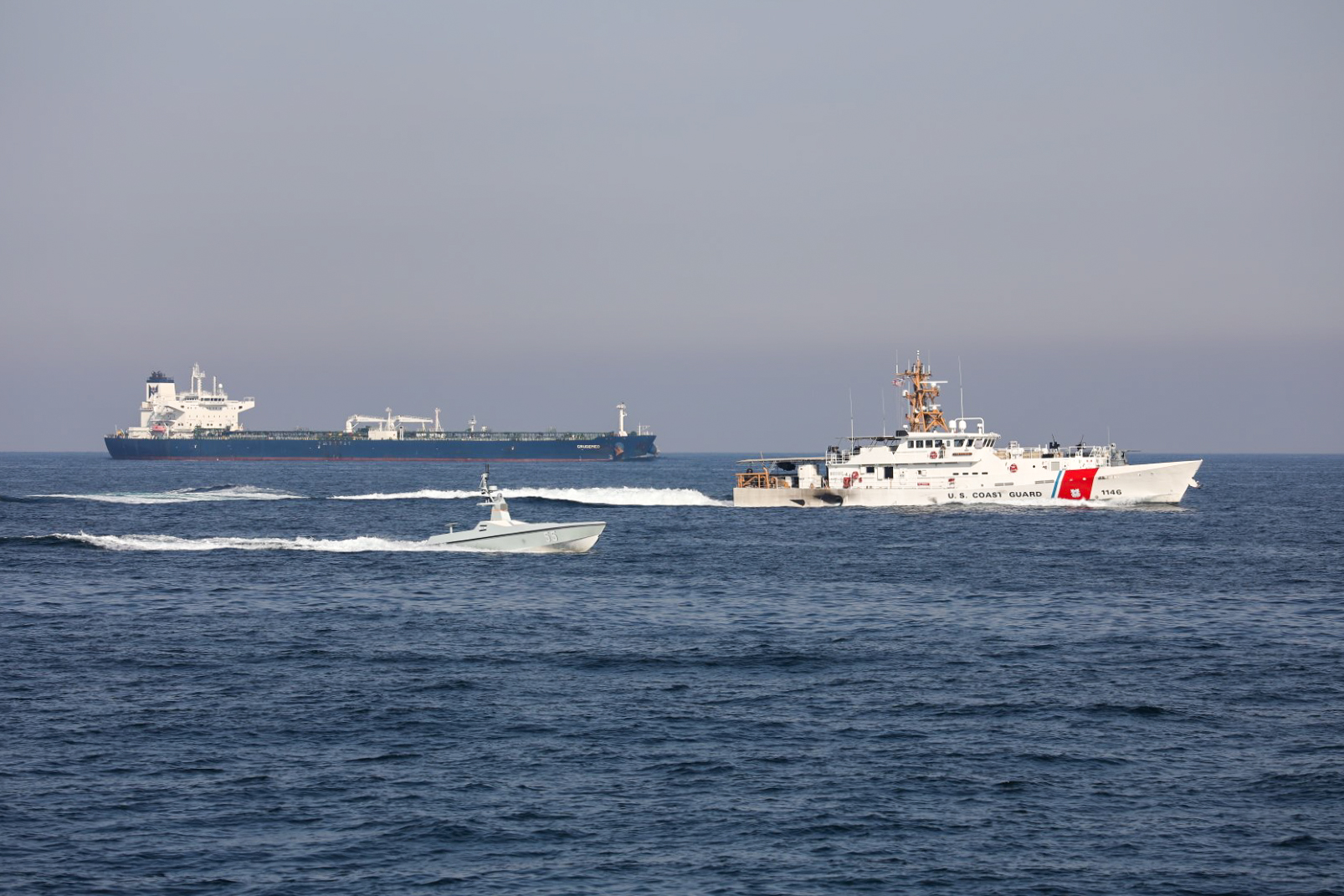
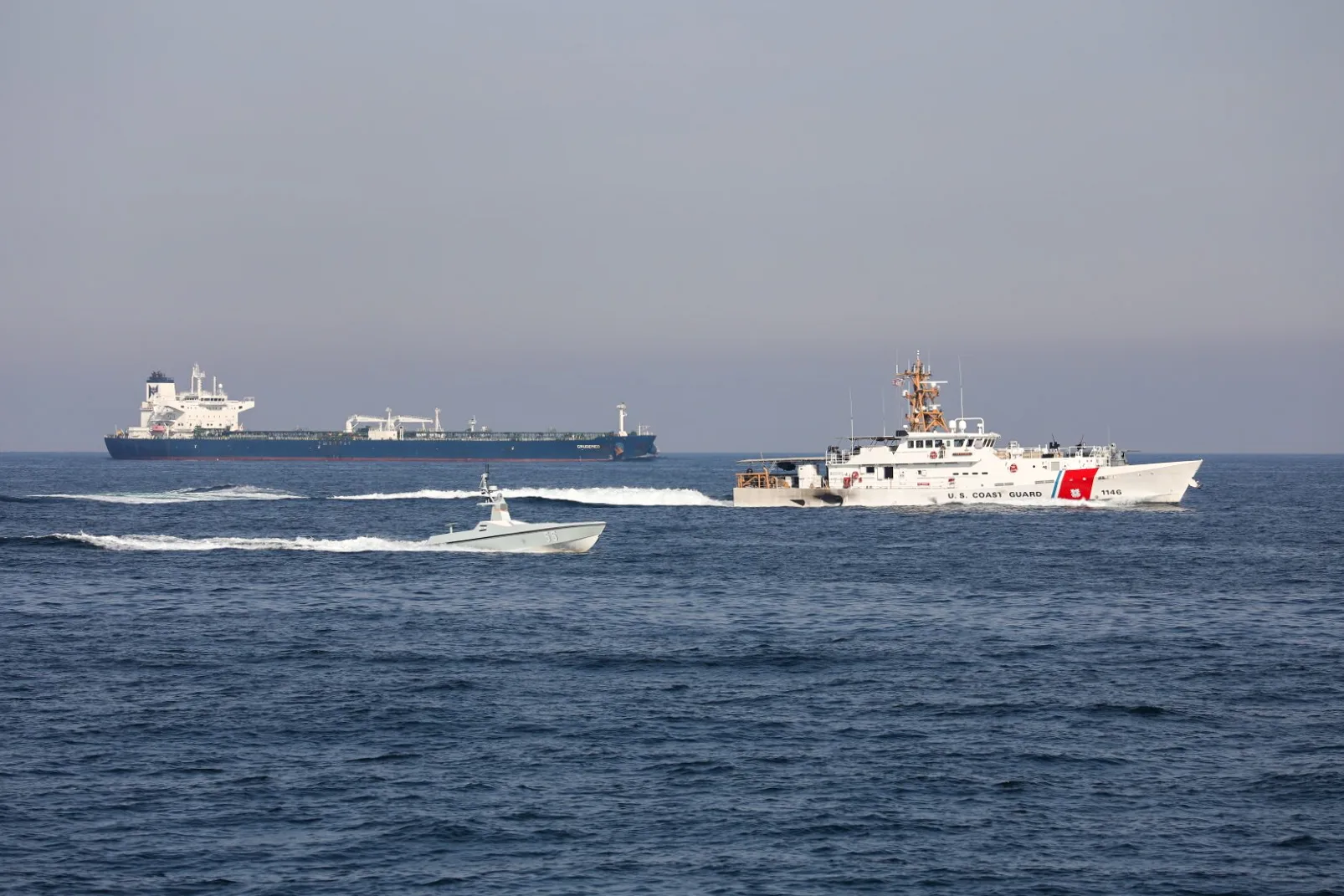
Strait of Hormuz — USCGC John Scheuerman (WPC-1146) transits the waterway alongside an L3Harris Arabian Fox MAST-13 unmanned surface vessel, April 2023 ,19. Photo credit: Information Systems Technician 1st Class Vincent Aguirre.
What Happened ? The recent U.S.–Israel war with Iran has disrupted shipping through the Strait of Hormuz, immediately exposing a long-standing structural weakness in Iraq's oil export system. Nearly 93% of Iraq's crude exports flow through Basra's export infrastructure , which is wholly dependent on uninterrupted Gulf access.[1] With oil exports averaging around 3.26 million barrels per day (bpd) at roughly 68 USD per barrel in the month before the war, a full disruption would cost Iraq about 221 million USD in daily revenue. This is a sobering figure given that oil accounts for nearly 90% of federal state revenues,[2]
Why It Happened? Iraq's export geography has not meaningfully changed in decades. The majority of Iraq’s exports flow through the Persian Gulf from the al-Basrah Oil Terminal and several single point moorings. Alternative corridors, including the Iraqi Pipeline in Saudi Arabia (IPSA) to the Red Sea, the Iraq-Syria Pipeline through Syria to the Mediterranean, and the Iraq–Turkey Pipeline (ITP), were all developed in the 1970s and 1980s. Jordan and Iraq have been discussing the potential for an Iraq-Jordan pipeline since 2013, but this remains a concept on paper. Today, only the ITP remains nominally active, with actual export of around 250,000 bpd against a nameplate capacity of 1,600,000 bpd. However, it is constrained by infrastructure deterioration, production-decline in northern fields, and regional instability. The other routes have fallen into disuse through a combination of physical degradation, unresolved political disputes, and shifting regional alignments.
Why It Matters for Iraq? Export concentration is not merely a logistical problem with substantial economic and fiscal implications . The northern corridor could theoretically have moved 400,000–500,000 bpd, but security uncertainty and the unresolved Baghdad–Erbil dispute delayed any export resumption for nearly 18 days after the Strait of Hormuz was closed. The absence of credible security guarantees for international oil companies operating in the Kurdistan Region has kept an additional 200,000 bpd effectively stranded . Iraq's relationships with the countries that could unlock alternative routes — Saudi Arabia, Jordan, and Syria — continue to be complicated by domestic political pressures that have historically obstructed normal bilateral engagement.
What to Watch Next? As long as the current crisis endures, Iraq will suffer financially. The new Iraqi cabinet will need to determine if it will prioritize serious infrastructure investment . Iraq is well aware of the policy and technical discussions regarding export diversification. The question is whether institutional inertia, fiscal constraints, investor confidence, and the political economy of sectarian populism will once again prevent the government from acting on a lesson it has already paid to learn.
2. Chevron's Potential Entry Signals Shifting Investment Dynamics in Iraq's Upstream Sector
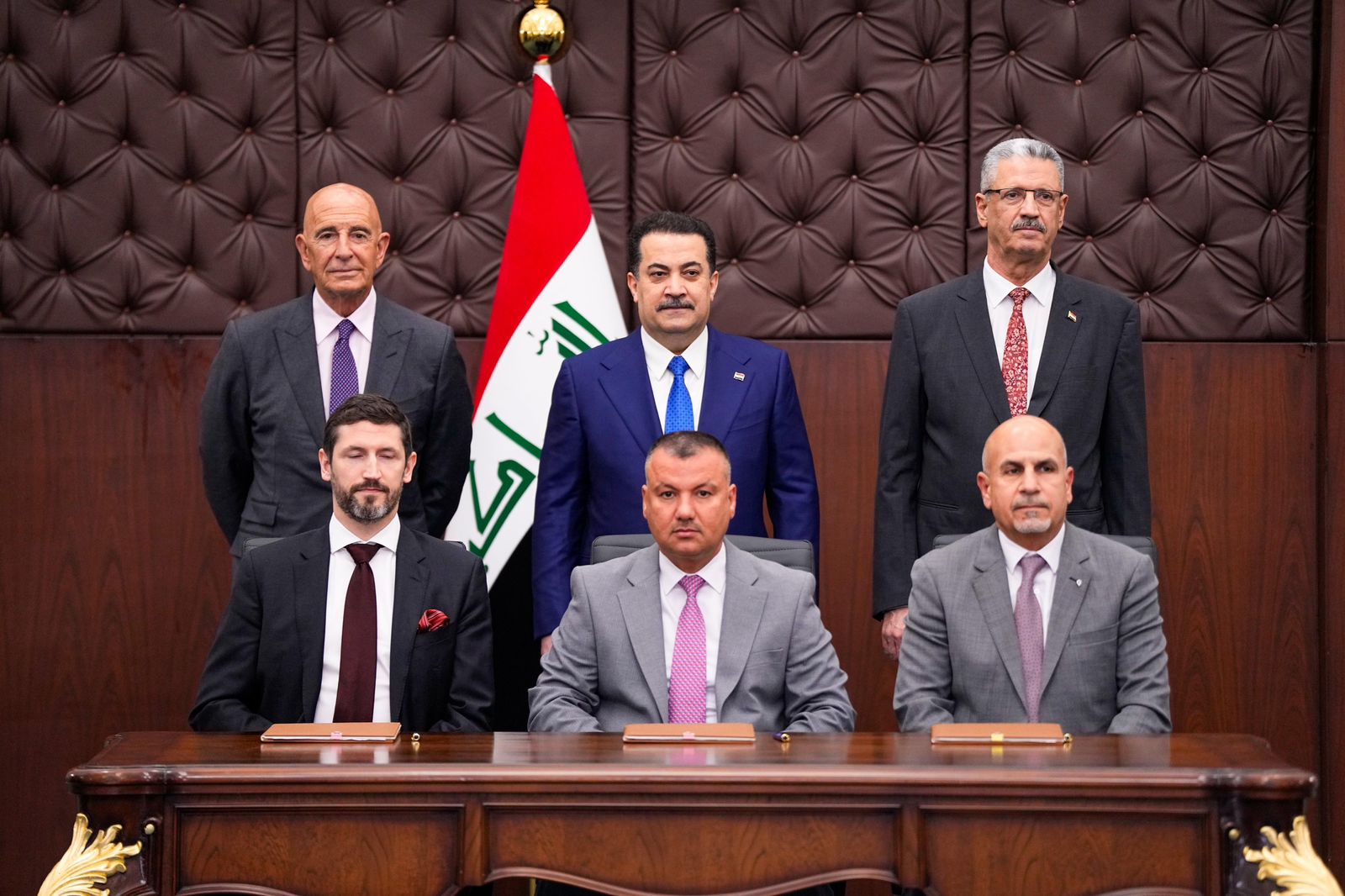
The signing ceremony of the Chevron-Iraq deal took place in Baghdad on February 23, 2026. Photo credit: Office of Prime Minister Sudani.
What Happened? On February 23, 2026, Iraq signed a package of agreements that could bring Chevron into West Qurna-2, one of the country's largest producing fields, following the anticipated exit of Russia's Lukoil under Western sanctions.[3] The deal transfers interim operatorship to Basra Oil Company and grants Chevron a one-year exclusive window to negotiate a new contract. Additional memoranda of understanding cover potential cooperation at Balad and several exploration blocks in Dhi Qar province.
Why It Happened? Chevron's potential entry reflects a visible geopolitical rebalancing in Iraq's upstream sector, following TotalEnergies' presence at Basrah's Ratawi, ExxonMobil's return to Majnoon, and BP's return to fields in Kirkuk.[4] Over the past decade, Western companies have gradually reduced their exposure in Iraq, while Russian and Chinese firms have expanded their involvement. Recent sanctions on Russian energy companies have now disrupted that arrangement. Baghdad appears to be using this opening deliberately by not simply filling an operational gap but signaling a broader repositioning of its investment partnerships.
Why It Matters for Iraq? West Qurna-2 produces around 450,000 bpd, which represents a significant share of Iraq's total output.[5] Therefore, keeping the field operational is central to Iraq’s production strategy and revenue generation. Chevron's potential entry carries a broader signal: that Iraq can attract a U.S. major at a moment when geopolitical realignment is reshaping who invests where in the Middle East’s energy sector.
Iraq has struggled to attract large Western oil companies since the first two bid rounds in 2009. A smooth ownership transition that avoids production disruption will protect revenue continuity at a time when Iraq's budget remains under pressure. The risk, however, is that the agreements were concluded under a caretaker government, leaving their legal standing and political durability uncertain until a new Iraqi government is formed and confirms them.
What to Watch Next? The West Qurna-2 negotiations will effectively set a precedent for Iraq's upstream contracting environment. How Baghdad manages this as a strategic opportunity will determine long-term production growth, associated gas-capturing for electricity-production, and state revenues. Plus, How the regional geopolitical developments associated with the US-Israel war against Iran affect Iraq's economy, and specifically its energy sector and the working environment for Chevron, is also a key variable to watch.
3. Regional Conflict Disrupts Domestic Fuel Markets
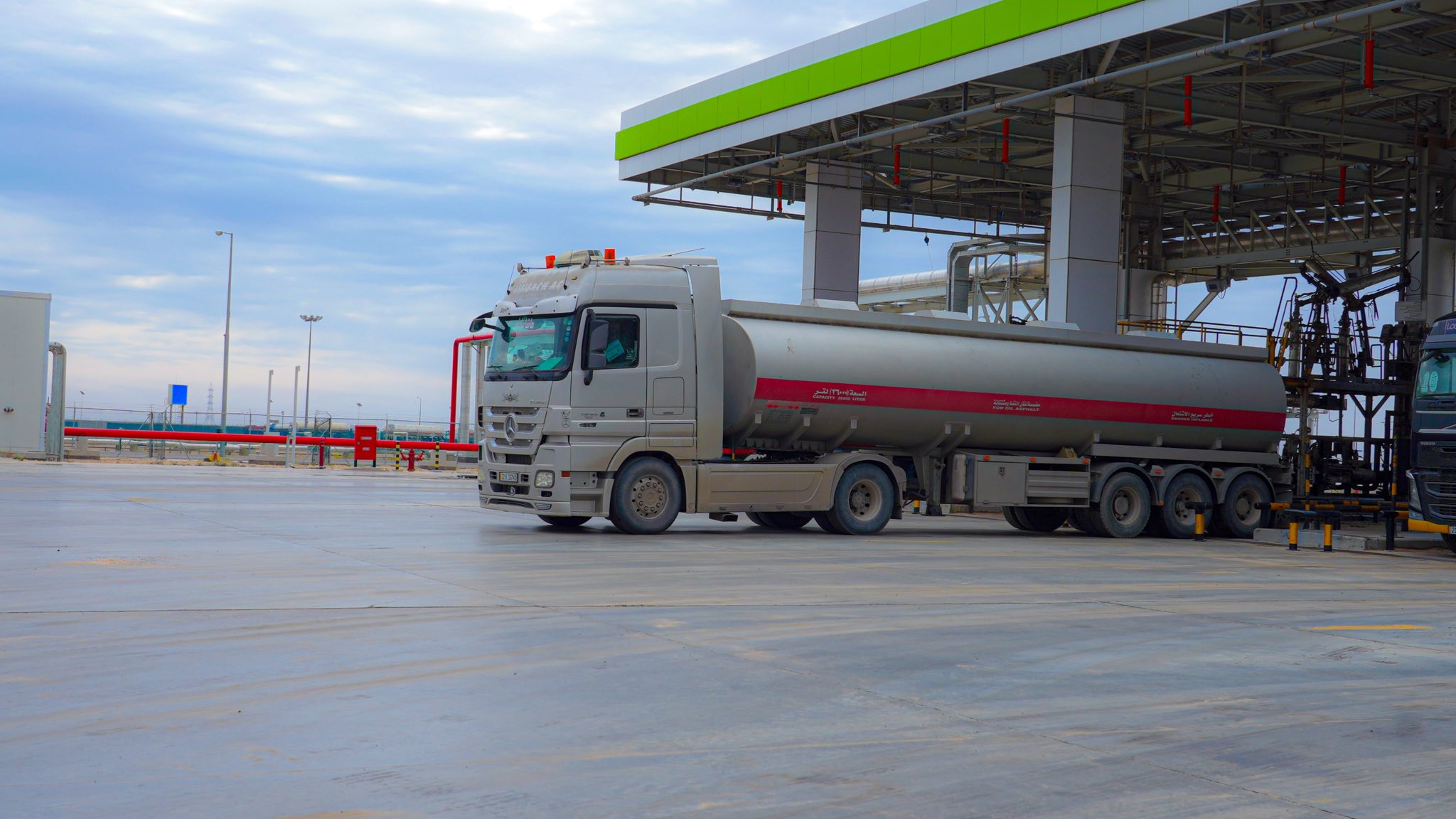
A fuel tanker being loaded at the Karbala Refinery. Photo credit: Karbala Refinery official website
What Happened? The war between Iran, the U.S., and Israel has triggered fuel shortages across Iraq and affected the availability of both gasoline and liquefied petroleum gas (LPG).[7] Iraq's cabinet authorized emergency gasoline imports, granting the State Oil Marketing Organization (SOMO) an exception from standard procurement rules.[8] The shortages were caused by refinery disruptions, the evacuation of foreign technical personnel from key facilities, and the loss of some captured associated gas supply when production dropped in Basra’s oil fields.
Why It Happened? These disruptions were due to a number of specific factors. The departure of expatriate workers at the Karbala Refinery disrupted higher-grade gasoline production. Limited storage capacity for heavy fuel oil at other refineries forced operators to reduce throughput. In the Kurdistan Region, the shutdown of the main processing facility at Khor Mor sharply compressed LPG supply. These are not new vulnerabilities, but rather reflect the downstream sector's aging infrastructure and operating conditions that leave little margin for external shocks.
Why It Matters for Iraq? The price effects were immediate and regressive. By early April, official LPG retail prices in the Kurdistan Region jumped from around 425 IQD per liter to approximately 1,100 IQD (or from 9,000 to 20,000 IQD per cylinder). Prices were even higher on the informal market. Kerosene rose from roughly 700 to 950 IQD as households switched fuels. For lower-income families and small businesses dependent on subsidized energy, these are not minor fluctuations: they are welfare shocks. The resort to emergency imports also underscores the paradox that Iraq, one of the world's largest crude producers, remains structurally exposed in refining and gas processing.
What to Watch Next? Iraq's downstream vulnerabilities are well documented. This latest crisis demonstrates the necessity for investment in the refining sector with a focus on more storage capacity and LPG production. What has been missing is the institutional follow-through to address them before the next disruption arrives.
4. Iraq Opens Syrian Export Route to Relieve Fuel Bottlenecks
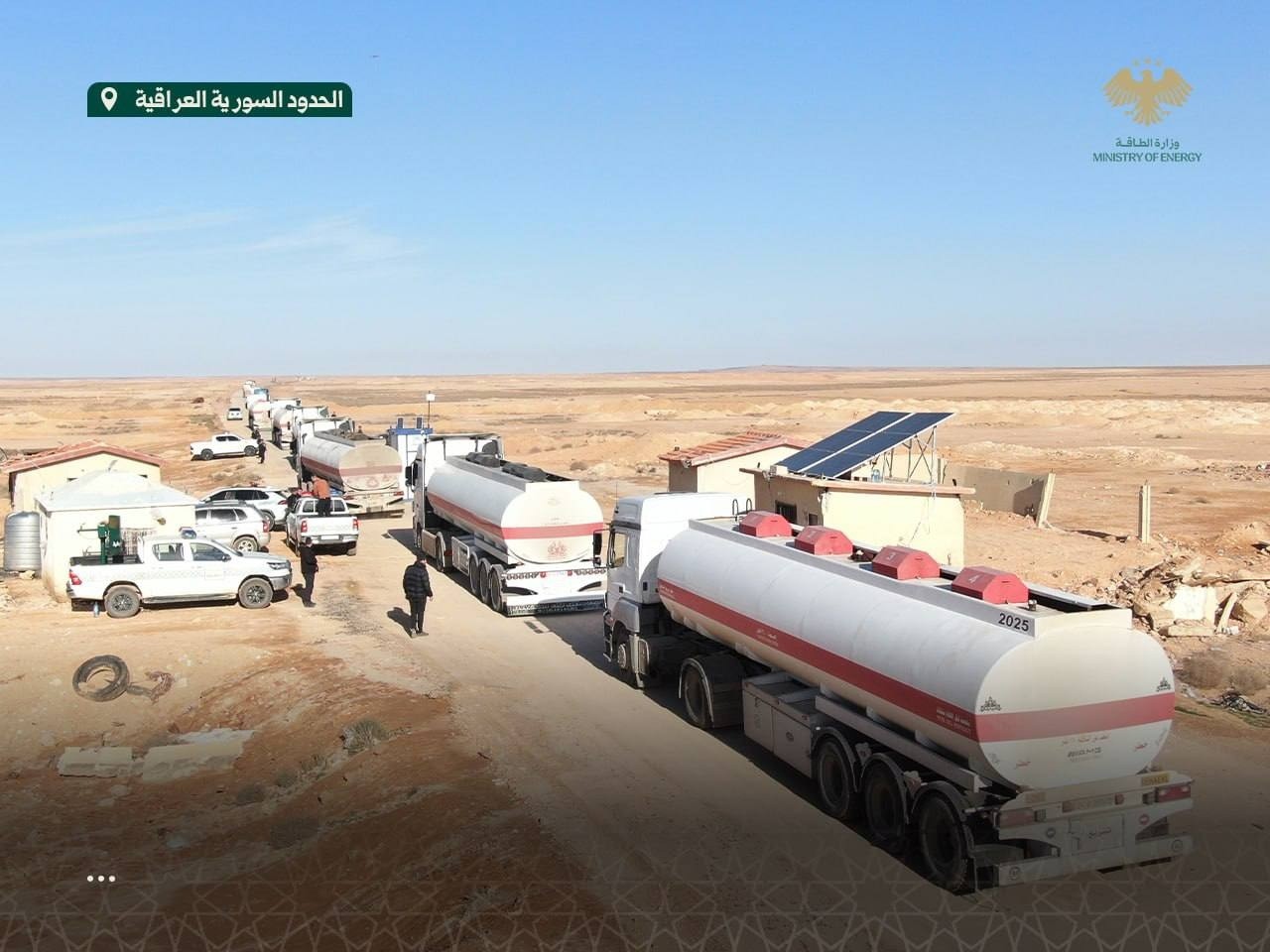
Iraqi tanker trucks transporting heavy fuel oil (HFO) to Syria’s Baniyas port, starting April 1, 2026. Photo credit: Syrian Ministry of Energy.
What Happened? On April 1, 2026, SOMO began exporting heavy fuel oil (HFO) by truck through the port of Baniyas in Syria. This represents the first such export in decades. Initial shipments ran at around 200 trucks per day, with plans to scale up to 500. The move came as Iraq faced acute export constraints following the disruption of Gulf shipping routes. Early indications suggest the same corridor could be extended to crude oil exports if maritime disruptions persist.[9]
Why It Happened? The immediate driver for restarting this export route was the accumulation of HFO within Iraq's refining system. Because most Iraqi refineries are relatively simple or old, they produce HFO at rates of 40% to 50% of total output. It is a byproduct that must be continuously evacuated for refinery operations to continue. When Gulf export routes were disrupted and onsite storage for HFO reached capacity, several refineries were forced to reduce or halt production entirely. This directly contributed to domestic shortages of gasoline, diesel, and LPG for Iraqi households. Reopening the Syrian route provided an urgently needed outlet to clear inventories and restore throughput across the refining system.
Why It Matters for Iraq? At a moment when Iraq had already absorbed substantial revenue losses from maritime disruptions, the Baniyas corridor offers a partial but meaningful addition to the country's export flexibility. More broadly, the move signals a revival of energy cooperation with Syria after decades of interruption — itself a notable geopolitical development. That said, trucking is an expensive and inherently limited solution for exporting crude oil. The cost per barrel is significantly higher than pipeline transport, volumes are constrained by road capacity and logistics, and the route remains vulnerable to security conditions on both sides of the border. The reopening is better understood as emergency relief than structural diversification.
What to Watch Next
The critical question is whether Iraq treats this corridor as a temporary fix or the foundation for something more durable. Restoring pipeline infrastructure between Iraq and Syria would transform the route's economics and strategic value considerably. Whether Baghdad moves in that direction — and whether the political conditions in Damascus allow it — will determine if this development marks a genuine turning point in Iraq's export diversification or simply another missed opportunity.
[1] Staff of Iraq Oil Report. “Iraq begins nationwide production shutdowns.” March 4, 2026. https://www.iraqoilreport.com/news/iraq-begins-nationwide-production-shutdowns-47571/
[2] Iraqi Ministry of Finance data on public revenues and expenditures, https://mof.gov.iq/Budget-implementation-Archive.aspx
[3] Media Office of Iraqi Prime Minister Mohammed Shi a Sudani. https://www.facebook.com/photo/?fbid=1399847452189210&set=d41d8cd9
[4] Iraqi Ministry of Oil: https://www.oil.gov.iq/?article=2201
[5] “Uncertainty surrounds Iraq’s West Qurna-2 oilfield.” https://www.iraqinews.com/iraq/uncertainty-surrounds-iraqs-west-qurna-2-oilfield/#google_vignette
[6] Formal Facebook account of the company: https://www.facebook.com/photo?fbid=1337847318377739&set=pcb.1337847445044393
[7] “Majeed, Ghareeb. “Gas prices has soured by three folds, and some bakeries have closed.” March 22, 2026. Rudaw. Published in Kurdishhttps://www.rudaw.net/sorani/business/220320262
[8] “The Prime Minister chairs the 12th regular meeting of the Council of Ministers in the presence of the Deputy Prime Minister for Energy Affairs and Minister of Oil.” Ministry of Oil, Government Media and Communications Office. March 24, 2026.https://www.facebook.com/ministryofoil201/posts/pfbid02Fin4UZUqtiFbVUJCzWjbSJi1P76Qj6e89QKUsmyqxACZB6W9toSr3FbbxVgY1cAcl?rdid=QqadTWTookZhAw98
[9] Syrian Petroleum Company, Public Statement, April 1, 2026. https://www.facebook.com/photo?fbid=122127675807122430&set=a.122115497445122430