
Energy powers economies, but it also reshapes the communities and landscapes around it. So, how can companies deliver economic value while remaining ethical and accountable to the people and environments they affect?
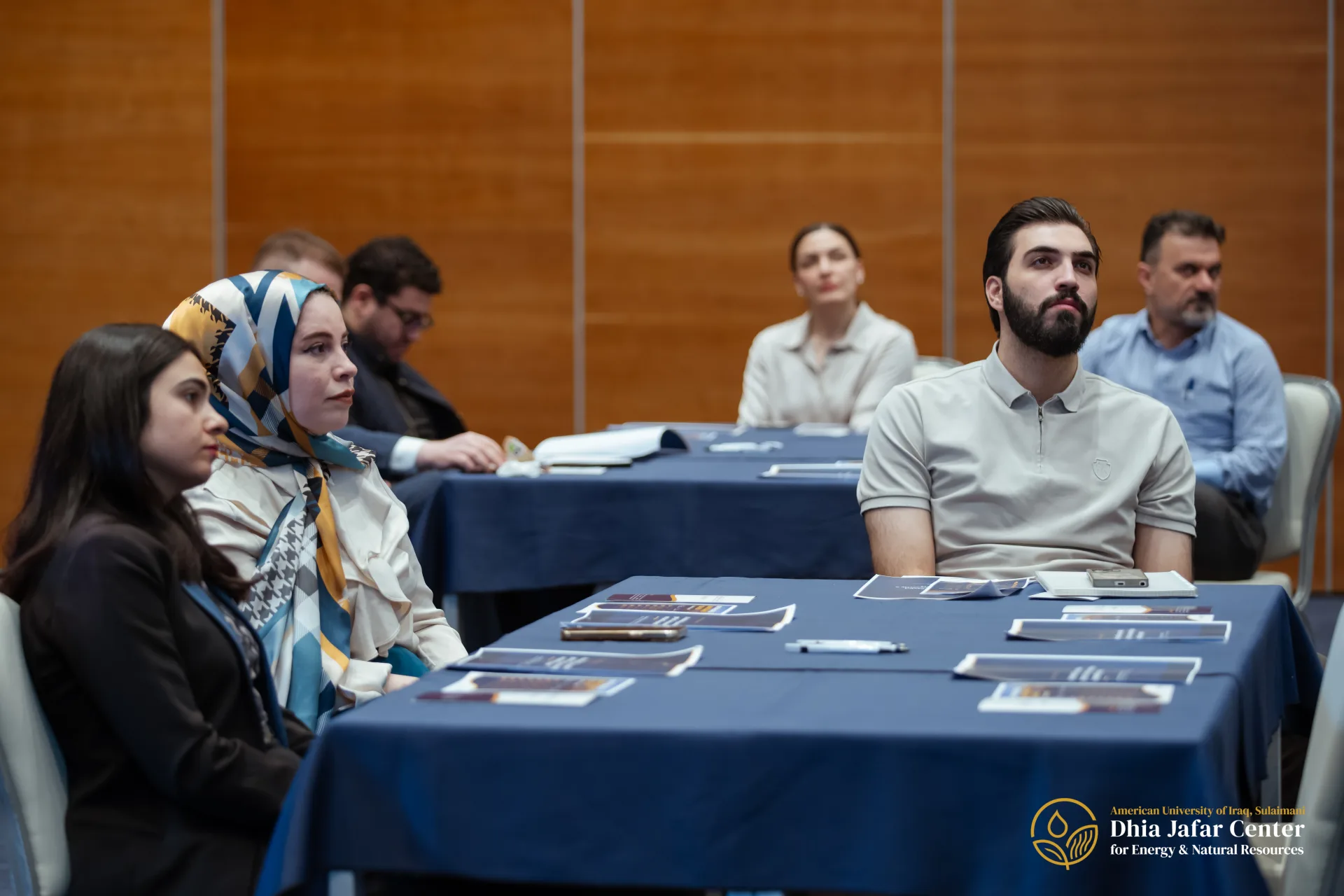
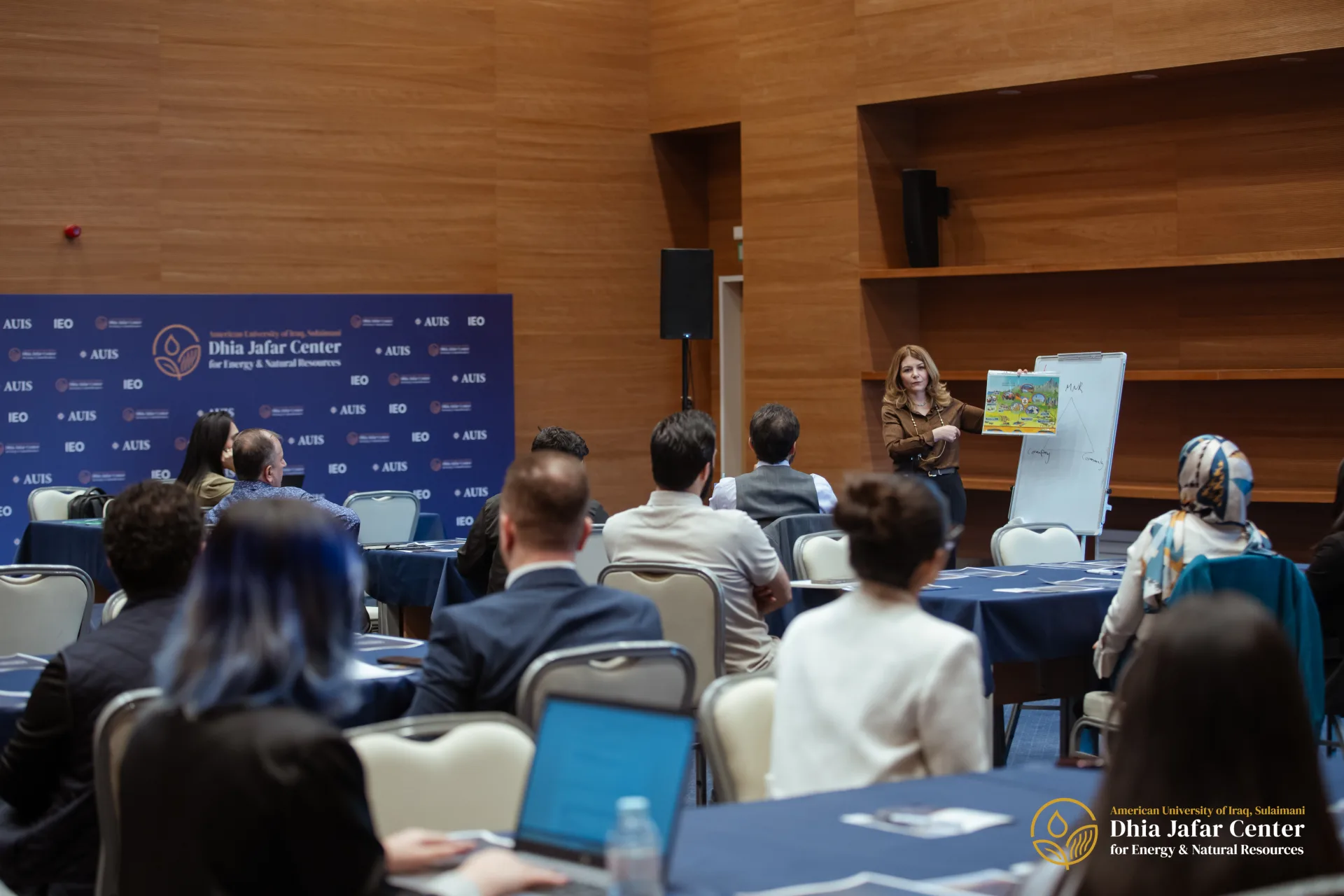
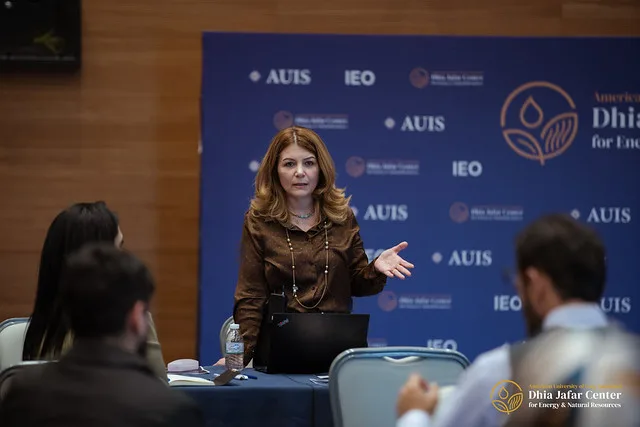
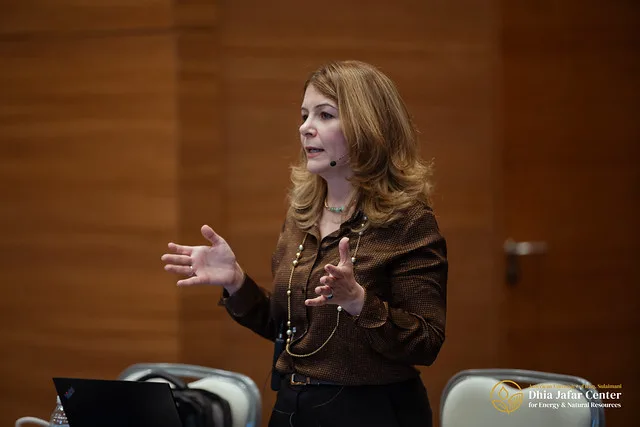
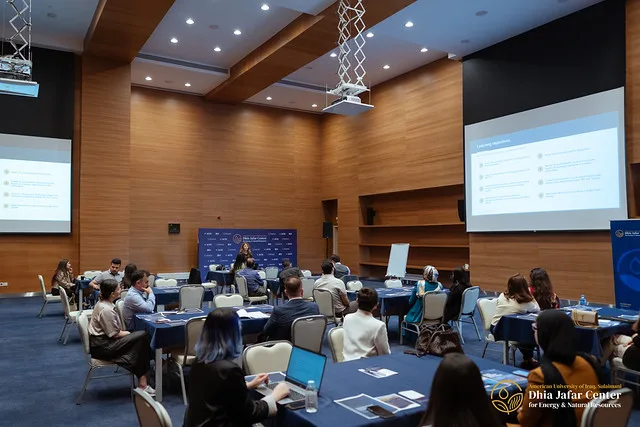
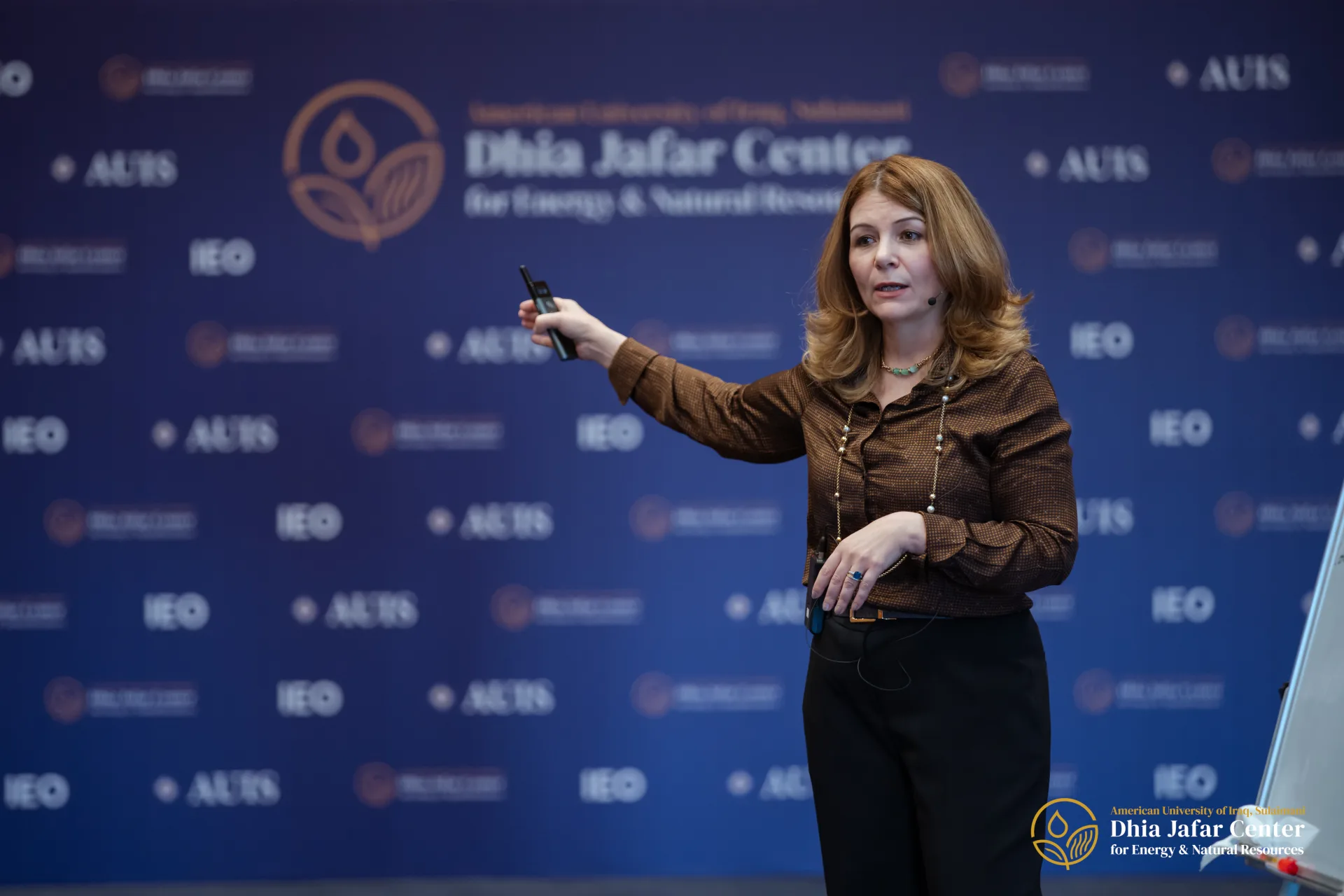
To tackle this question, the AUIS Dhia Jafar Center for Energy and Natural Resources hosted an interactive workshop led by Ms. Bnar Salah, Administration Manager at Taurus Energy and the Director of Brayan Foundation, whose presentation covered corporate social responsibility (CSR) and environmental, social, and governance (ESG) standards, specifically drawing from her experience in the oil and gas industry.
What is CSR and ESG?
Corporate social responsibility (CSR) is about far more than charitable donations. It describes how a company runs its operations, manages its environmental and social impacts, and engages with the communities around it. In oil and gas, those impacts are tangible: land use, water consumption, pollution, traffic, health concerns, and strain on local infrastructure. Companies therefore need to assess local conditions, job prospects, and health and safety risks before work begins.
Environmental, social, and governance (ESG) standards build on this idea by turning responsibility into something measurable. If CSR is about taking responsibility, ESG is about proving it by holding companies accountable: it provides a framework for monitoring and measuring their environmental, social, and governance performance. Taken together, the two ask not only what a company does for society, but whether it has created a visible, positive impact on the lives of the community members it operates among.
CSR and ESG in Practice
As shown in Ms. Bnar’s presentation, CSR follows four practical steps. It begins with a needs assessment: gathering demographic data, consulting stakeholders, and identifying who is most affected and what they need most. Next comes strategy, in which the company sets objectives, weighs its strengths and weaknesses, picks priority sectors, and proposes a budget, with regulators involved. Implementation follows, with clear timelines and indicators, projects delivered through contractors, and priority given to local content. The final step is measuring impact: evaluating results, collecting community feedback, making improvements, and reporting back.
That last step is where ESG takes over, offering a structure built on three pillars. The environmental pillar covers emissions, flaring, water, waste, and spills. The social pillar covers worker safety, labour rights, local hiring, and community health. The governance pillar covers leadership oversight, ethics, compliance, and transparency. ESG, Ms. Bnar stressed, is not just a report or a score; it must shape real decisions, controls, and targets.
Measuring Responsibility and Accountability
As Ms. Bnar noted, the two frameworks are complementary to each other. Consider a company that funds a vocational training programme as part of its CSR strategy. ESG asks what came of it: how many participants completed the training, and how many then found work. The distinction matters because success should be judged by outcomes, not by the money spent or the activities held.
Accountability was the workshop’s other focus, particularly the distinct roles of companies, local communities, and the government. Each carries different responsibilities for ensuring that operations proceed responsibly, community concerns are heard, and environmental and social impacts are properly managed.
Creating Shared Value
Accountability, however, is only half the picture. Business success should also benefit the communities that host it. Rather than relying on charity alone, companies can hire locally, buy from nearby businesses, and invest in skills development. Examples from the Kurdistan Region and southern Iraq showed this in practice, with projects supporting education, healthcare, clean water, environmental initiatives, and local employment. Such investments meet real needs while strengthening ties between companies and their host communities.
Communities have a role to play too. Accessible grievance mechanisms let residents raise concerns about dust, traffic, or safety, and when companies investigate complaints, respond fairly, and learn from recurring problems, they can address risks before they escalate and rebuild trust. Ms. Bnar stressed that people can and should hold businesses to account, while keeping demands realistic and reasonable. Since accountability works best as a two-way relationship built on good faith.
Looking Ahead: Businesses With a Mutual Benefit
Ms. Bnar closed by pointing to young people as a catalyst for change, to use tools like CSR and ESG to engage companies constructively and push for better practices. The message was clear: only in five steps, business can operate in ways that respect the people and environments it affects from the start.
Do the operation successfully. Deliver safely and efficiently.
Understand your impact. Know the effects on people and places before work begins.
Reduce the harm. Limit environmental, health, and safety risks through careful planning.
Create value. Share benefits through local jobs, contracts, and skills.
Remain accountable. Measure results and answer for outcomes.
Ultimately, by pairing CSR’s sense of responsibility with ESG’s measurement and accountability, companies can move beyond profit alone toward more sustainable operations, stronger community relationships, and shared economic value.