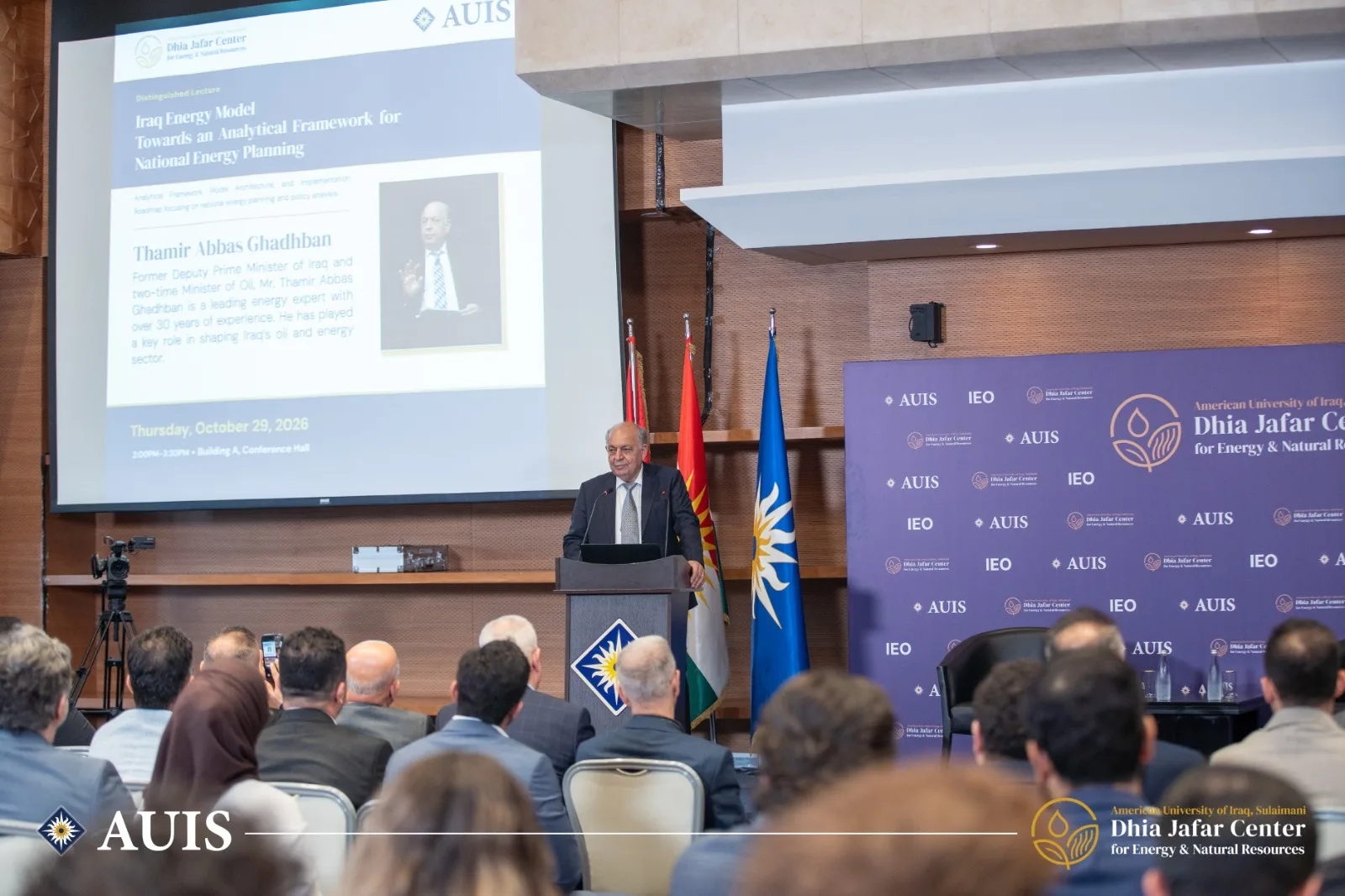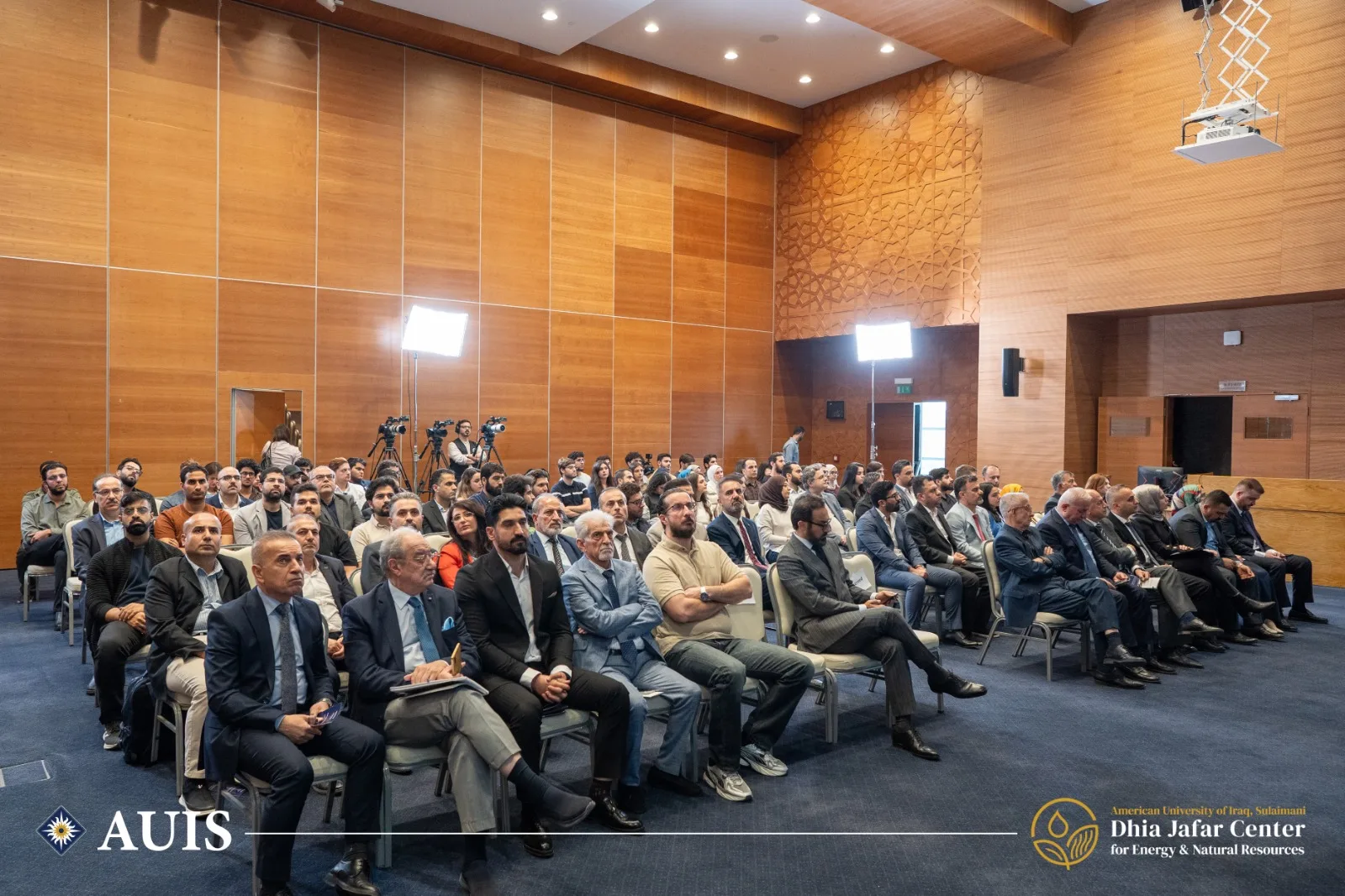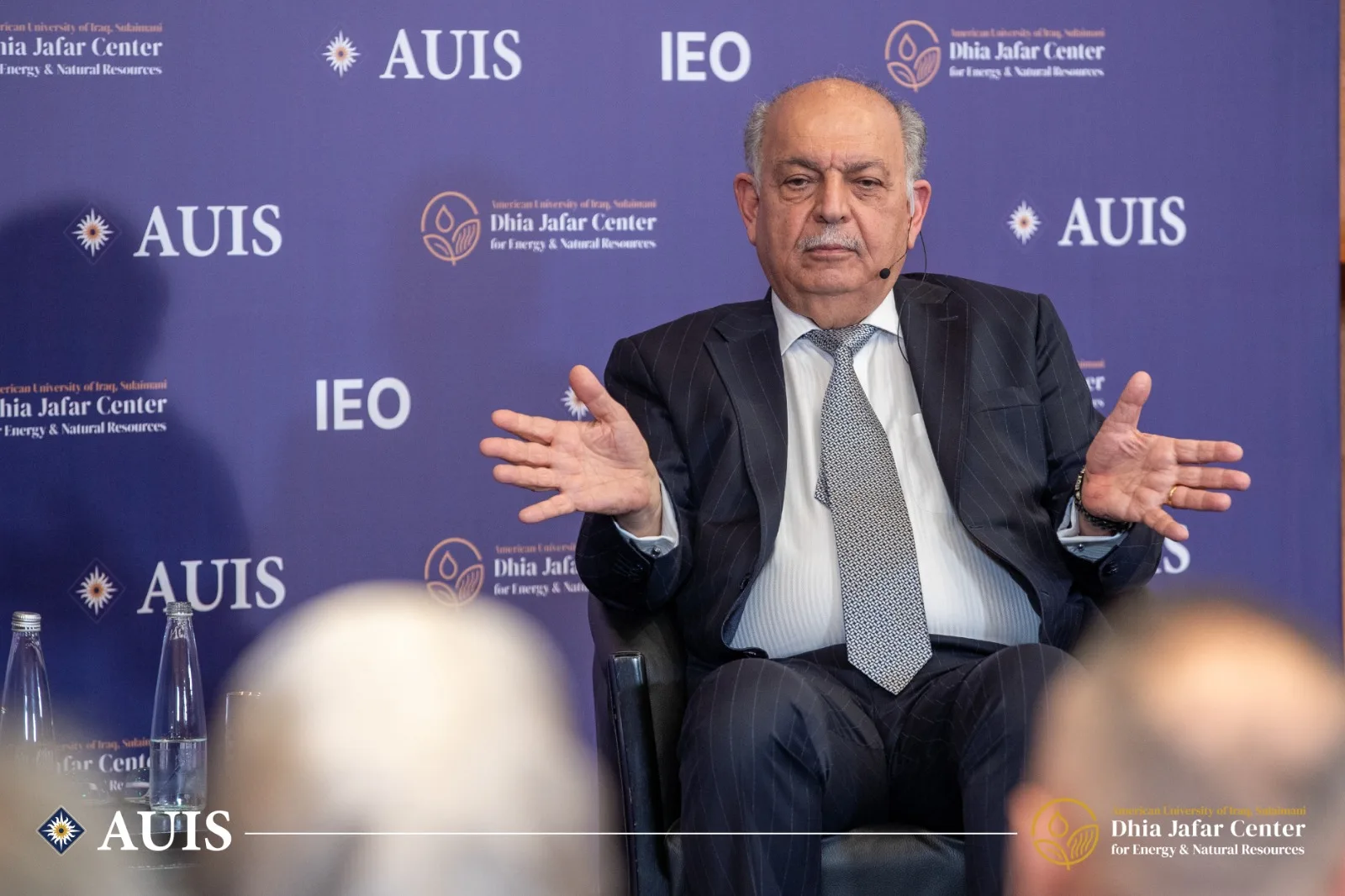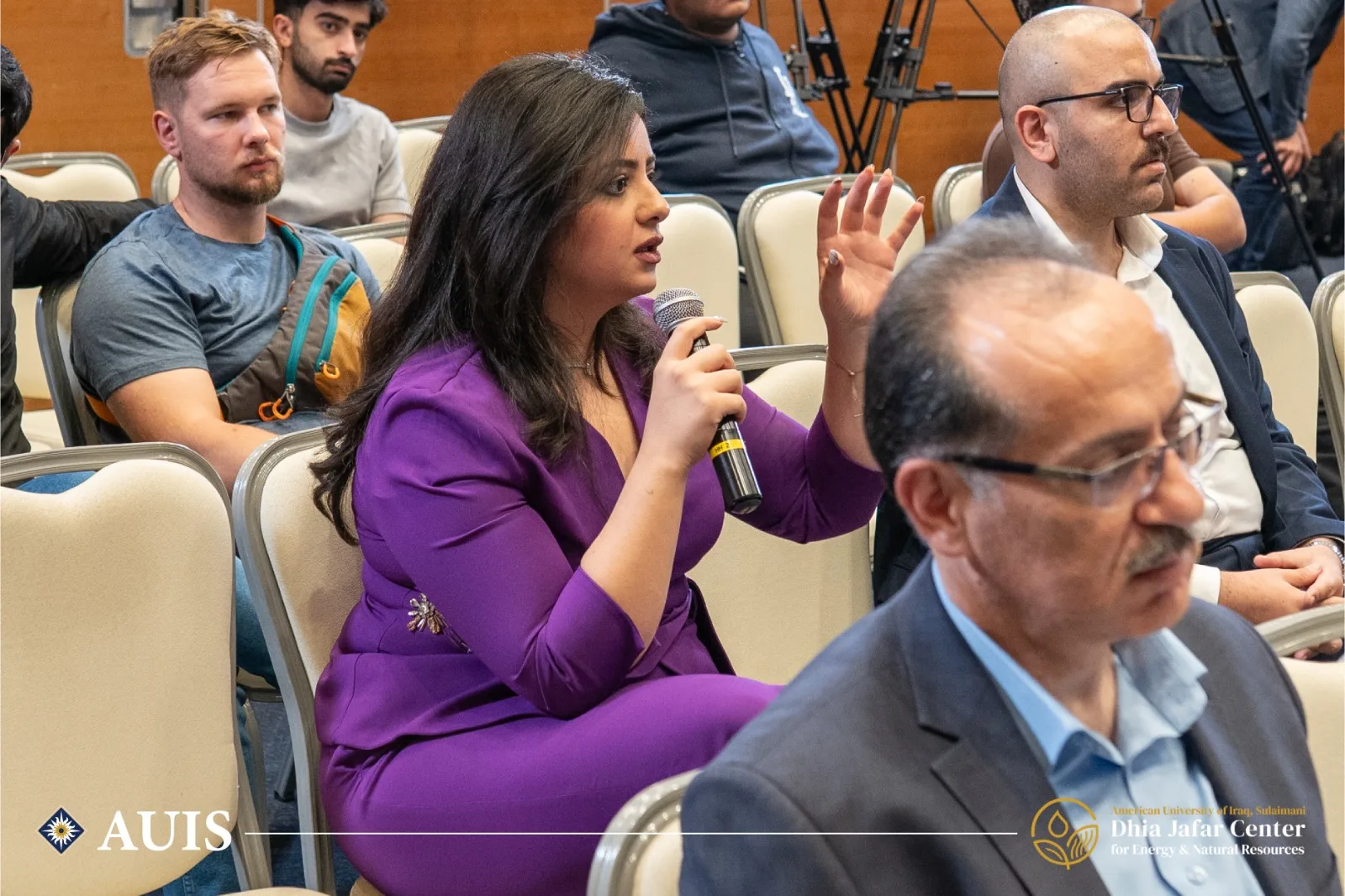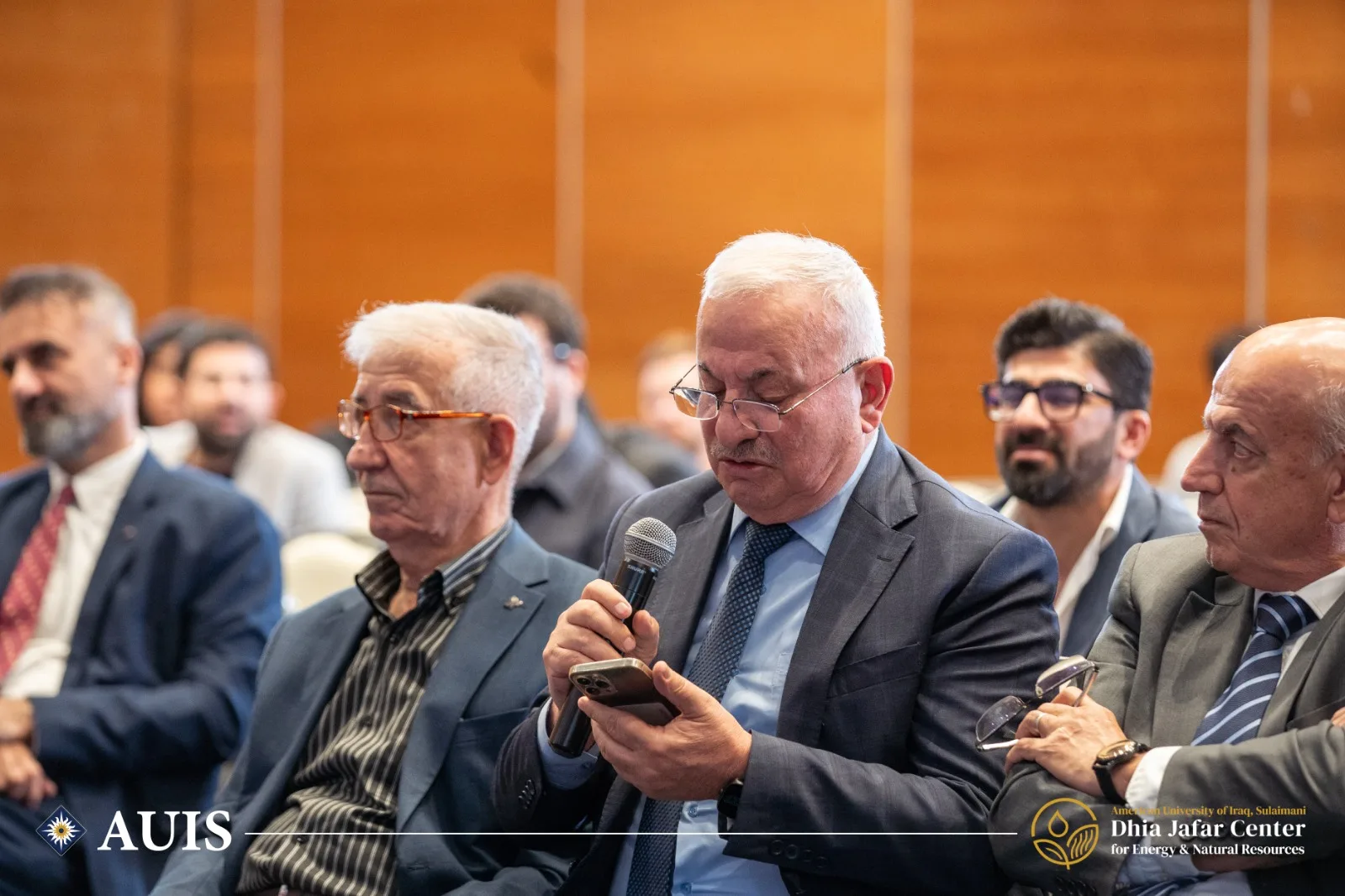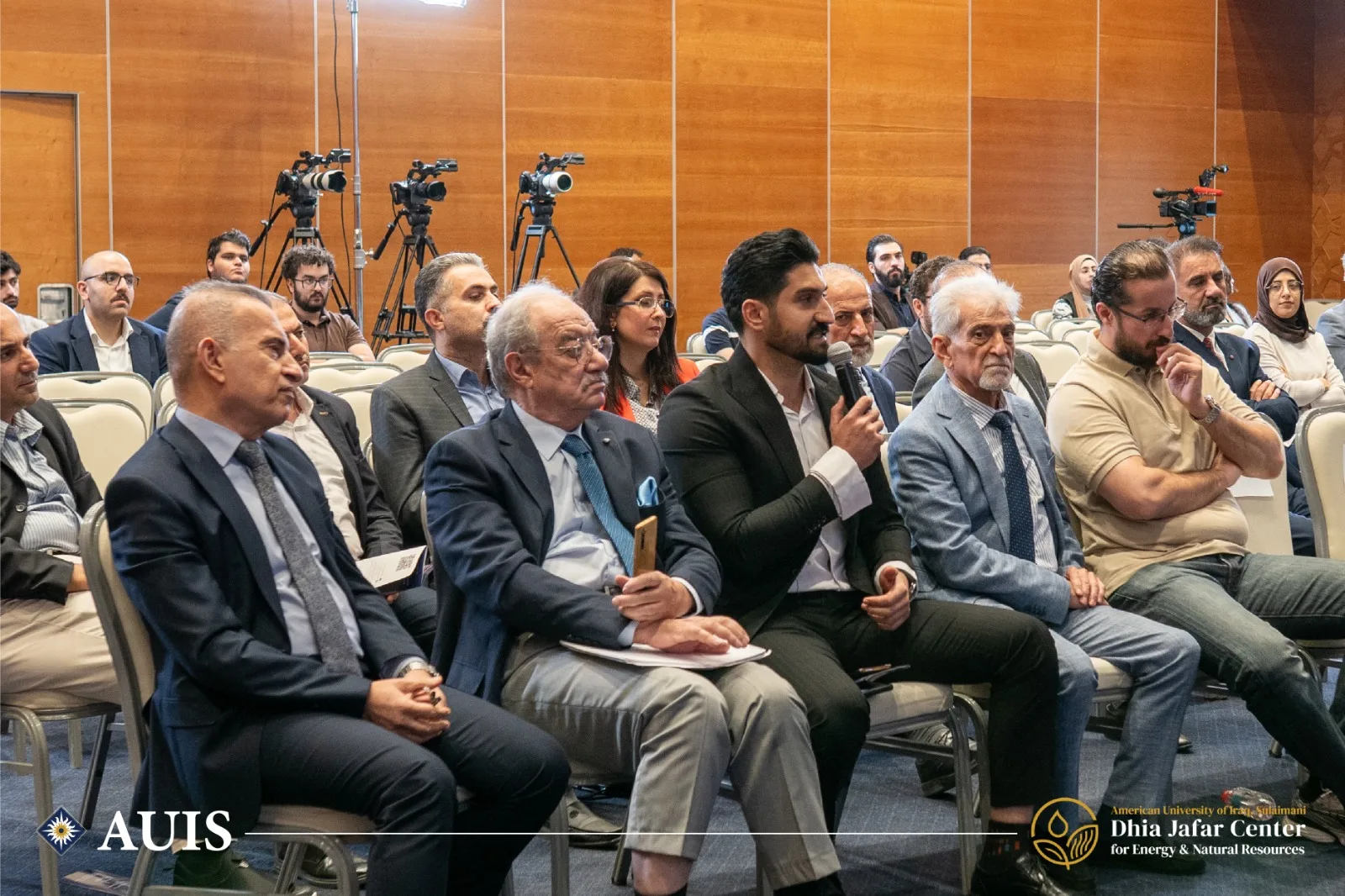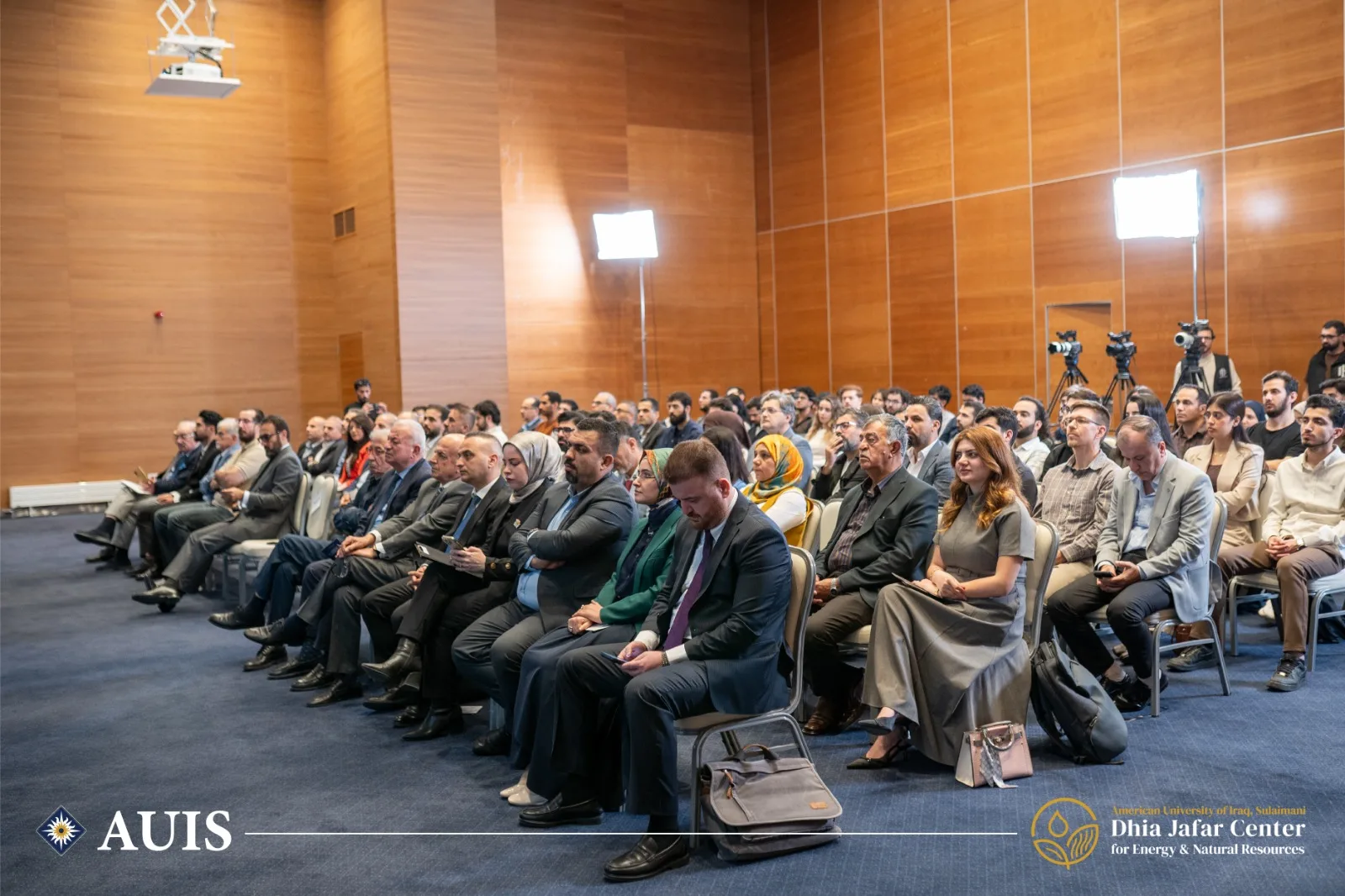

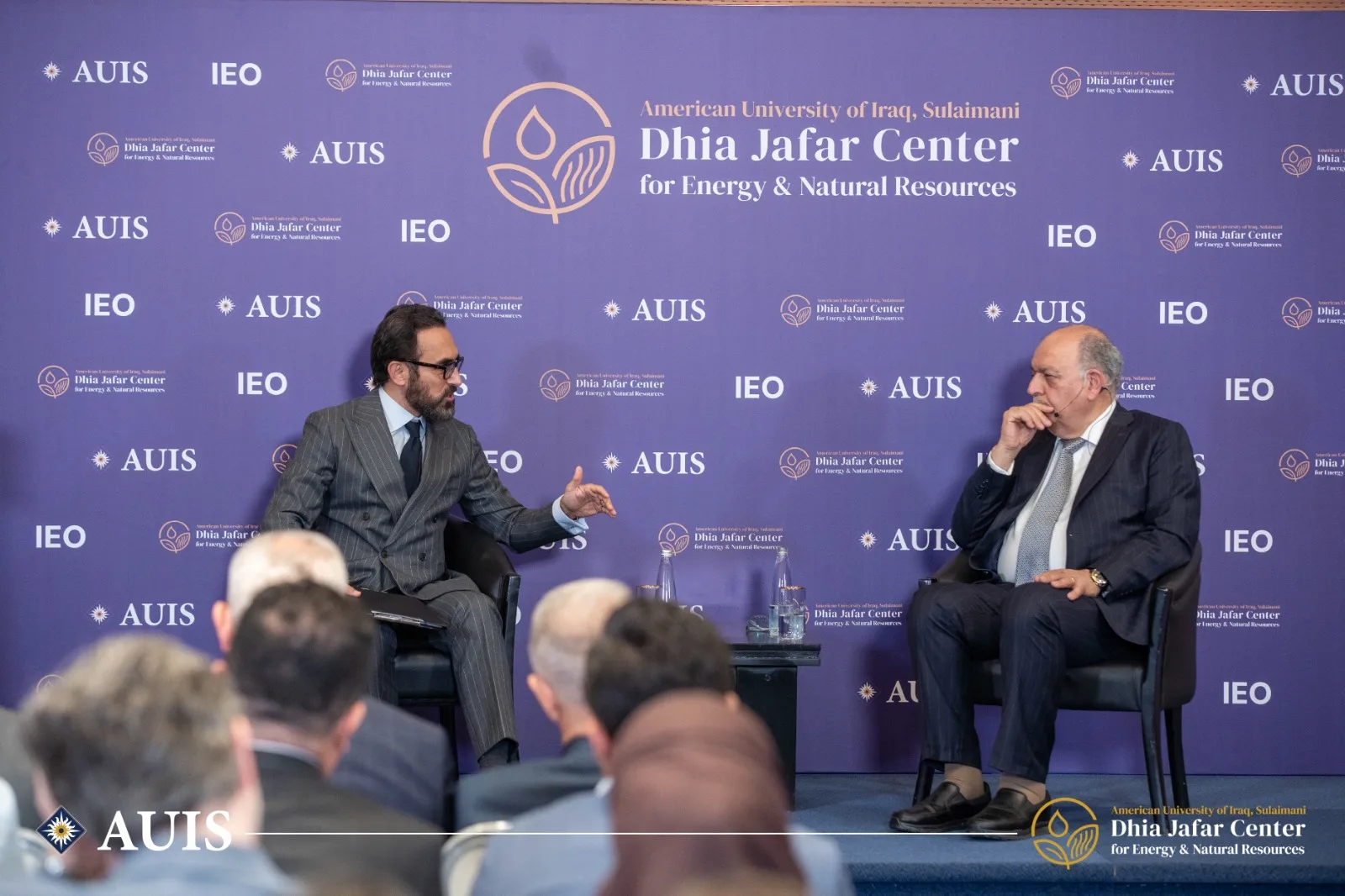
On October 29, 2026, former Oil Minister Mr. Thamir Ghadhban presented the “Iraq Energy Model” at the American University of Iraq, Sulaimani (AUIS). Moderated by AUIS President Dr. Bilal Wahab, the event addressed Iraq's systemic energy challenges and proposed an integrated planning framework to replace the country's historically fragmented approach.
The Core Problem: Volatility and Fragmented Planning Iraq heavily relies on volatile oil revenues (which swung from $89.2B in 2013 to $49B in 2015) while facing chronic domestic electricity shortages and massive gas flaring. Previous sector-specific initiatives, like the Integrated National Energy Strategy and various five-year plans, failed to connect the entire energy ecosystem. Because oil production, gas availability, and electricity generation are deeply interdependent, siloed planning has led to inefficient investments and systemic gaps.
Key Lecture Themes
Wealth vs. Reality: Future planning must abandon overly optimistic projections in favor of transparent, standardized data and realistic assessments of infrastructure and political stability.
The Electricity Crisis: The grid routinely fails to meet domestic demand—especially during summer—due to fuel shortages, poor maintenance, and transmission losses, not just a lack of power plants.
Infrastructure Bottlenecks: Disconnected institutions and heavy reliance on thermal generation require expanded gas-processing infrastructure and much tighter federal-regional coordination.
Compounding Pressures: Iraq must capture flared gas to power domestic grids, implement energy efficiency measures to manage surging population demand, and invest immediately in solar power to combat severe climate threats.
The Proposed National Energy Model: A comprehensive, data-driven planning system covering federal Iraq and the Kurdistan Region. By linking oil, gas, electricity, and consumer demand, the model allows policymakers to stress-test future scenarios (like oil price shifts or renewable rollouts) and optimize long-term investments.
Governance & Transparency: To succeed, the model must be locally owned and operated by a national steering committee and permanent technical unit, utilizing formal data-sharing agreements rather than relying on external consultants.
Despite its vast reserves, Iraq met only 62% of its peak electricity demand in 2025 and flared nearly a third of its produced gas. Mr. Ghadhban’s model offers a technical framework to resolve these inefficiencies, but its success ultimately depends on sustained political will and institutional commitment. Universities and the younger generation will be critical in this transition, providing the independent research, data collection, and trained professionals required to drive long-term energy reform.